
How to Find People in Claremont
A good Claremont people search starts by sorting the clue. Names, addresses, businesses, court parties, school staff, and older family-history clues do not live in one database. City Hall keeps local administrative records and staff contacts. Los Angeles County keeps the core deeds, vital records, voter records, assessor data, tax records, fictitious business names, and trial-court records. State portals add business entities, licenses, notaries, incarceration records, and the California Megan's Law registry.
Do not start with the broadest tool. Start with the most official one that fits the clue. A current Claremont address points to the Los Angeles County Assessor Portal before the recorder index. A probate clue points to LA Superior Court. A college affiliation may be faster in Pomona College, Claremont McKenna, CUSD, or Claremont Colleges Library records than in a county portal.
- Use the clue type first: name, address, business, school role, case type, or family-history event.
- Check the official online source that matches it, such as assessor, court, school, license, or business search.
- When no web index exists, move to the documented request route or in-person counter.
- Cross-check at least one second source before relying on a match.
- Keep searches lawful, personal, and tied to records the custodian actually opens.
Claremont Records Offices for Search
Claremont records are split by custodian. The City of Claremont public-records page points local requests to the City Clerk for city council records, local administrative files, permits, and city police records. Deeds, recorded documents, vital records, fictitious business names, and voter records are Los Angeles County Registrar-Recorder/County Clerk work. Property assessment clues come from the Assessor, while court cases run through LA Superior Court, not a separate Claremont municipal court.
Los Angeles County RR/CC
12400 Imperial Highway
Norwalk, CA 90650
(800) 201-8999
Claremont Deed Search Leaves Web
The strongest Los Angeles County quirk is the recorder index. The RR/CC says real estate records are public and available after filing, but the office does not provide online access to real-estate records or indexes. It cites Government Code section 6254.21 and the risk that protected home addresses of elected or appointed officials could appear online. That makes Claremont different from places where a grantor and grantee index can be searched from any browser.
The RR/CC in-person viewing page explains the physical split: 1851 to 1957 records are reviewed on the lower level in Norwalk, while 1958 to present records are reviewed on the second floor. The alphabetical indexes are by name and recorded year, and the office does not take telephone requests for index searches. A Claremont people search tied to old owners or liens may need an appointment and a narrow name-year trail.
| Record Trail | Best First Source | What It Adds | Access Limit |
|---|---|---|---|
| Current parcel | LA County Assessor | Address, AIN, assessment context | Owner fields must be verified on a live record |
| Recorded deed | LA County RR/CC | Grantor, grantee, document type, recording date | No open web index |
| Tax payment history | LA County TTC | Past three fiscal tax years by AIN | AIN required |
| Historic occupant | Libraries and archives | Directory, map, newspaper, yearbook clues | Often in person or catalog assisted |
The RR/CC real-estate records page is shown in the screenshot below, including the county's official route for public recorded-document access.
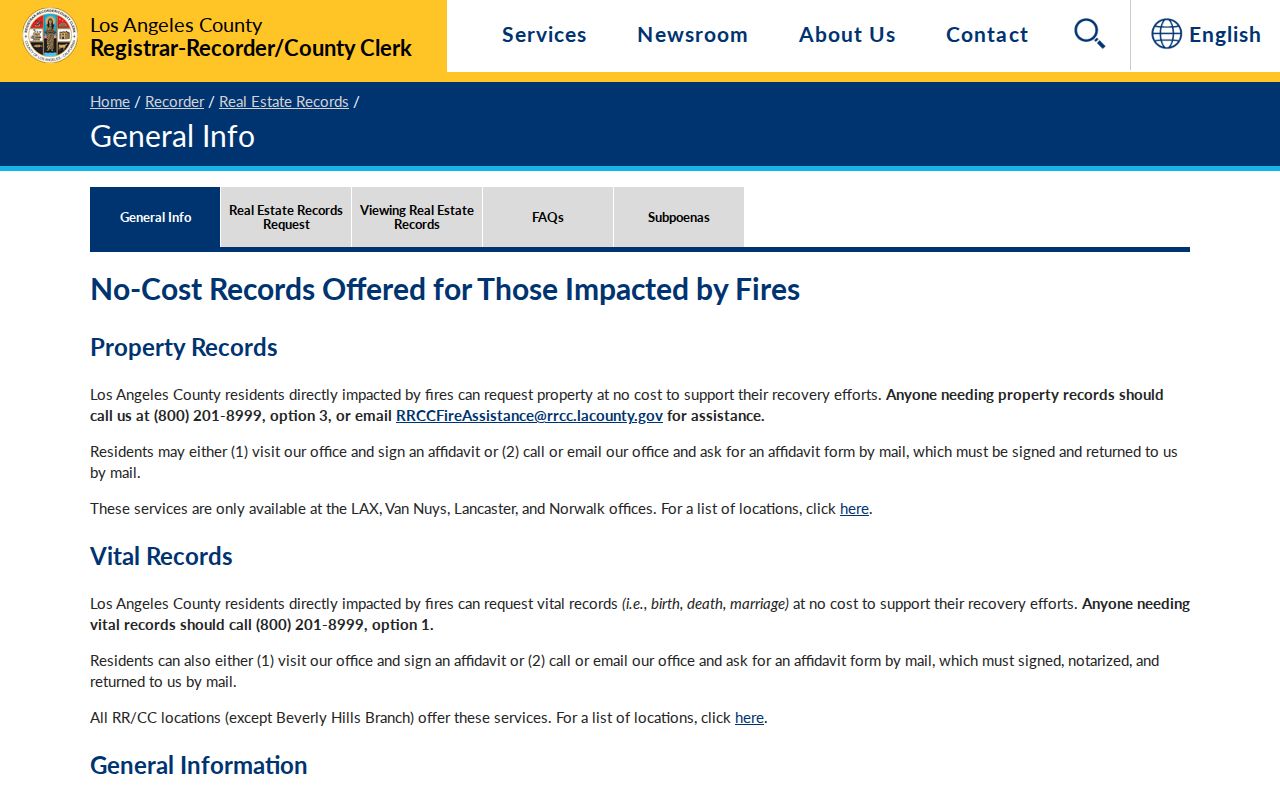
Use that page to confirm the current request channel before ordering a copy or planning a Norwalk index visit.
Claremont Address Search Path
For a Claremont address, the online path starts with the Los Angeles County Assessor Portal. The portal presents search by AIN or address and links to map search. The Assessor Identification Number is the key that connects an address to the tax portal and helps narrow a recorded-document request. If a person is tied to a parcel, the deed path still points back to the RR/CC.
Three terms keep the trail straight. A situs address is the property location. A mailing address is where tax or owner mail goes, and it may be different. A legal description is the tract, lot, or other deed text used in recorded documents. Treat each as a lead, not a final answer.
- AIN
- The Assessor Identification Number used by LA County property and tax tools.
- Grantor and grantee
- The parties giving and receiving an interest in a recorded document.
- Docket
- A court case record showing filings, parties, dates, events, and status.
- Certified copy
- A copy issued by the custodian with official certification, when the requester qualifies.
The Assessor Portal screenshot below shows why Claremont address work often begins with AIN or address search instead of the recorder.
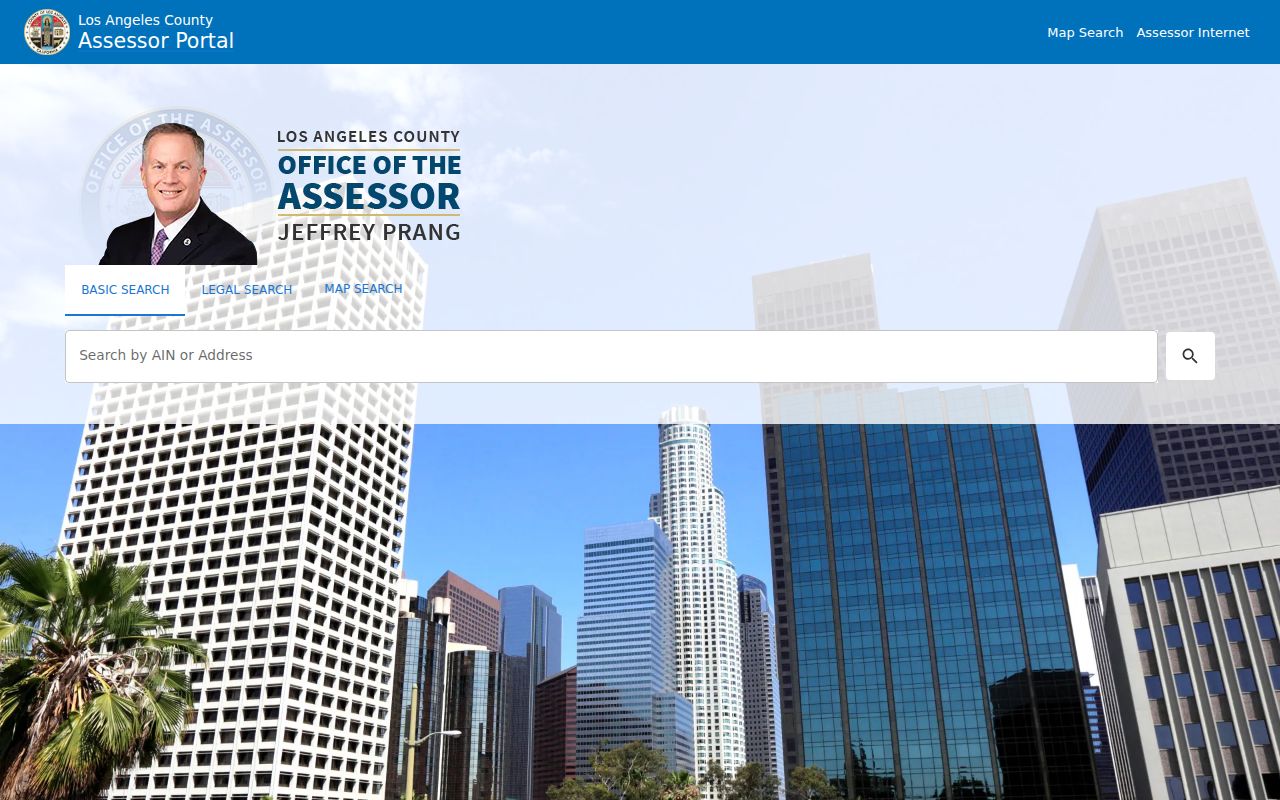
Once a parcel is identified, recorded-document requests and tax-history checks can be aimed at the right property instead of a broad name search.
Claremont Court Records Name Search
Claremont trial-court records are in the Superior Court of California, County of Los Angeles. The LA Superior Court Online Services menu is the main official route for civil, criminal, family, probate, small claims, and traffic tools. It includes case access, case images, calendars, name searches for case numbers, probate notes, divorce judgment documents, and other division-specific services.
Some electronic access can require guest or registered use and may involve fees under court rules. Court privacy limits also matter. Juvenile cases, sealed cases, adoption matters, some family-law records, protected addresses, and expunged or sealed criminal records are not general lookup material. Probate files are often the most useful lawful people-search court trail because they can connect a decedent, heirs, administrators, addresses, and property transfers.
| Court Source | Covers | Name Search | Access |
|---|---|---|---|
| LA Superior Court | Civil, family, probate, small claims, criminal, traffic | Division tools and case-number-by-name links | Online services, fees, login, or court channel may apply |
| Central District of California | Federal civil, criminal, bankruptcy, and appellate records | PACER party search | Federal PACER access |
The LA Superior Court online services screenshot shows the court divisions that matter when a Claremont name could appear in probate, civil, family, or small claims records.
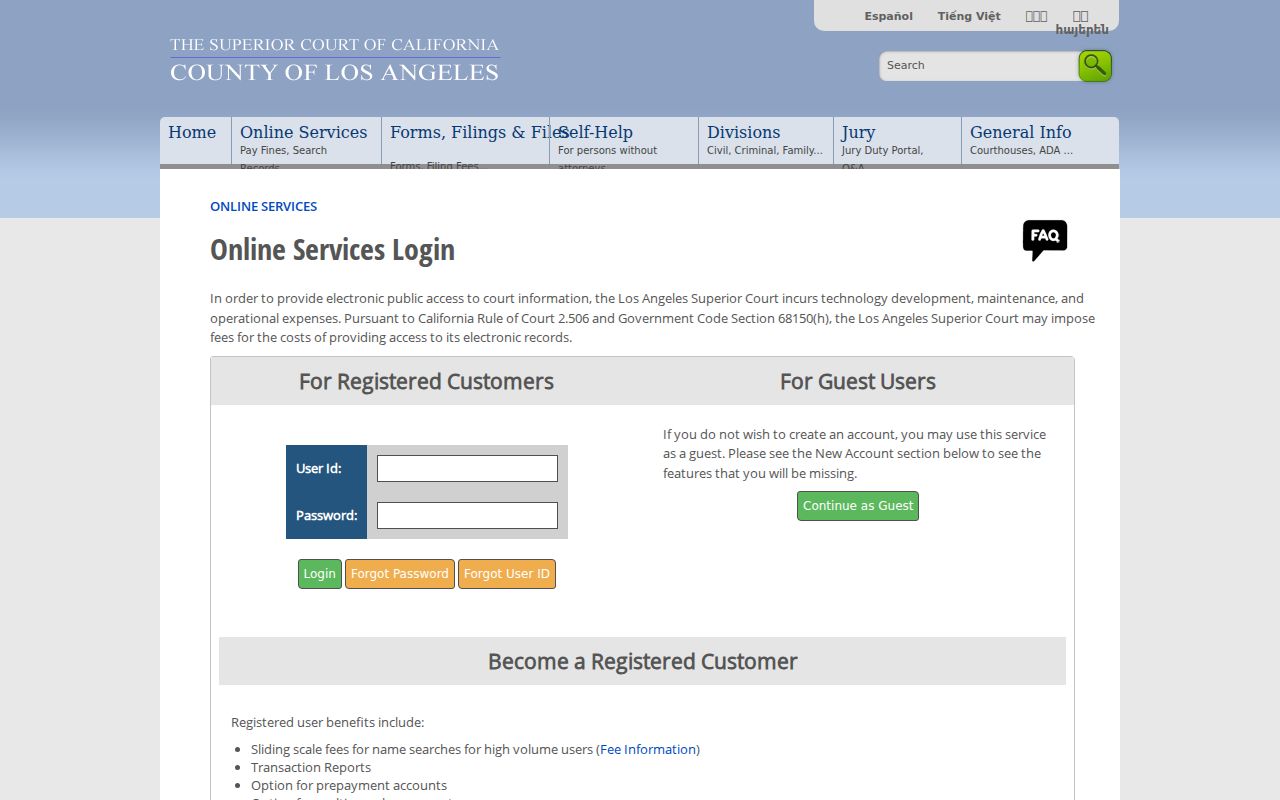
Pick the division first. A probate name search and a traffic lookup are different tools, even though both sit under the same court system.
Vital Records in Claremont
Birth, death, and marriage copies for Los Angeles County events run through the Los Angeles County RR/CC and the California Department of Public Health. The county's BDM application covers birth, death, and marriage records. California Health and Safety Code section 103526 separates authorized certified copies from informational copies. Authorized copies require an eligible requester and a sworn statement. Other requesters may receive informational certified copies marked as not valid to establish identity.
Vital records help family-history and heir work, but they are not an open name directory. For older Claremont residents, combine vital-record applications with obituaries, cemetery records, probate, historical directories, and library collections. Divorce files are court records through LA Superior Court; a state dissolution certificate is not the full court file.
Claremont College Directory Advantage
Claremont has an unusually strong education layer. The City of Claremont staff directory is useful, but the Claremont Colleges add current faculty and staff directories plus archival sources. Pomona College points users to Staff A-Z, Sitewide A-Z, offices, departments, and People Search. Claremont McKenna publishes faculty listings. CUSD has a staff search and department filter. These sources can surface official roles, departments, work contact paths, and profile pages.
For older people, the same education network becomes an archive. Claremont Colleges Library Special Collections reports nearly 200,000 volumes and more than 11,000 linear feet of manuscripts, personal papers, and college archives. It names city directories, maps, newspapers, photographs, printed histories, yearbooks, catalogs, organization records, scrapbooks, handbooks, and oral histories. That is a strong Claremont people search route for alumni, faculty, administrators, local historians, citrus-industry families, and long-term residents.
The Claremont city staff directory screenshot shows a local people directory with official staff names, departments, phone numbers, and email links.
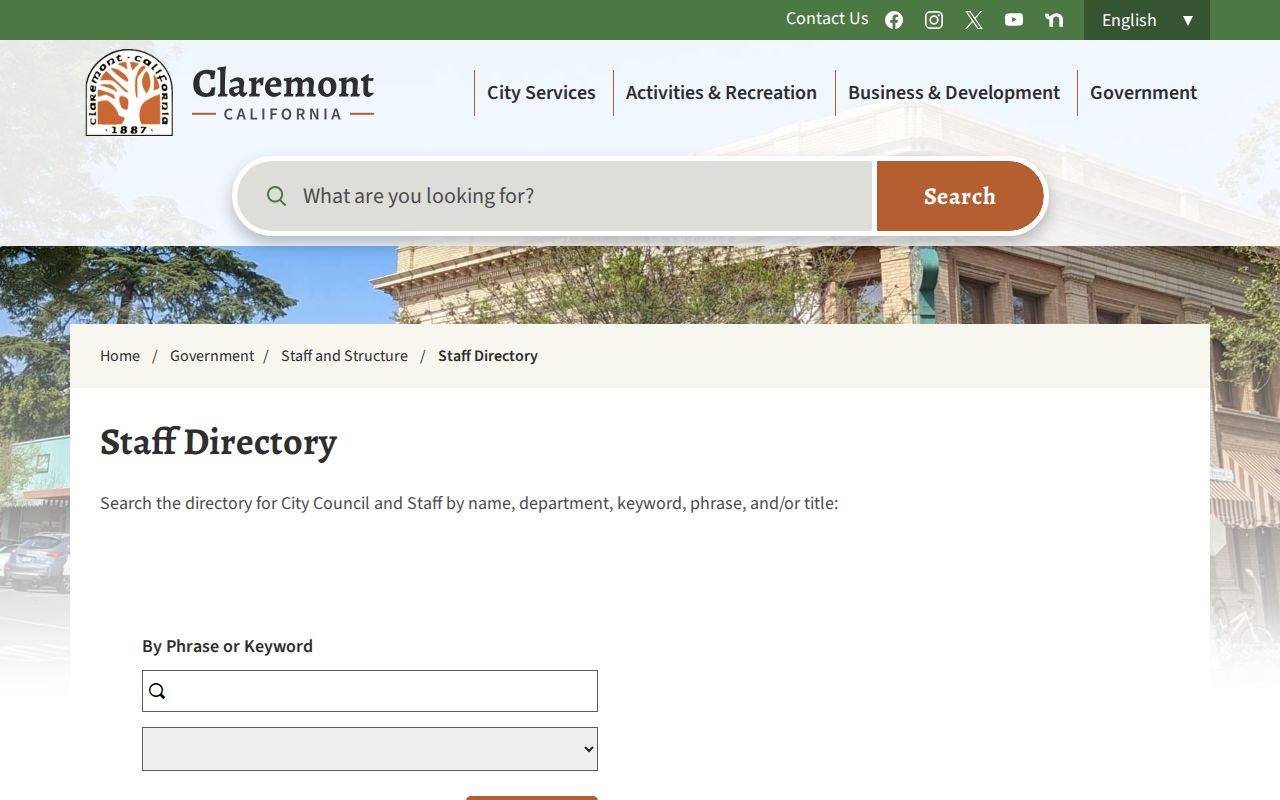
Use official staff and college directories for role-based searches, not as substitutes for private residential records.
Claremont Voter Lookup Limits
Voter information is split between a private status check and a regulated voter-file request. The Los Angeles County voter registration verification tool is meant to let a voter check status with identity facts. The California Secretary of State also points voters to registration status resources. Neither is a browse-all-voters directory for Claremont.
The full voter file is restricted by California Elections Code sections 2188, 2194, and 18109 plus state regulations. The Secretary of State application states that voter registration information is not public data. Approved requests require a documented purpose, identification, original signature, fees, and review. Confidential voters and Safe at Home participants are excluded or protected under California rules. The dedicated Claremont voter registration records page covers that record set in depth.
Use limits. Public records and voter tools must not be used to stalk, harass, threaten, or harm anyone.
Claremont Business Name Search
Business and license records can connect a person to an official role without using commercial people-finder databases. California Secretary of State bizfile Online searches corporations, LLCs, and limited partnerships, while the UCC search covers lien notices. The LA County RR/CC Fictitious Business Name search and open data layer cover current FBN statements from February 2024 to present, with copies available from April 2011 to present through county channels.
Professional licenses add another path. The California Department of Consumer Affairs License Search verifies many DCA board and bureau licenses and indicates whether a license is current, expired, or disciplined. Some professions use board-specific systems outside DCA, so a Claremont search may need the State Bar, Contractors State License Board, Medical Board, teacher credentialing, or other board portals.
The DCA License Search screenshot below shows the state license portal used when a Claremont person may be tied to a regulated occupation.
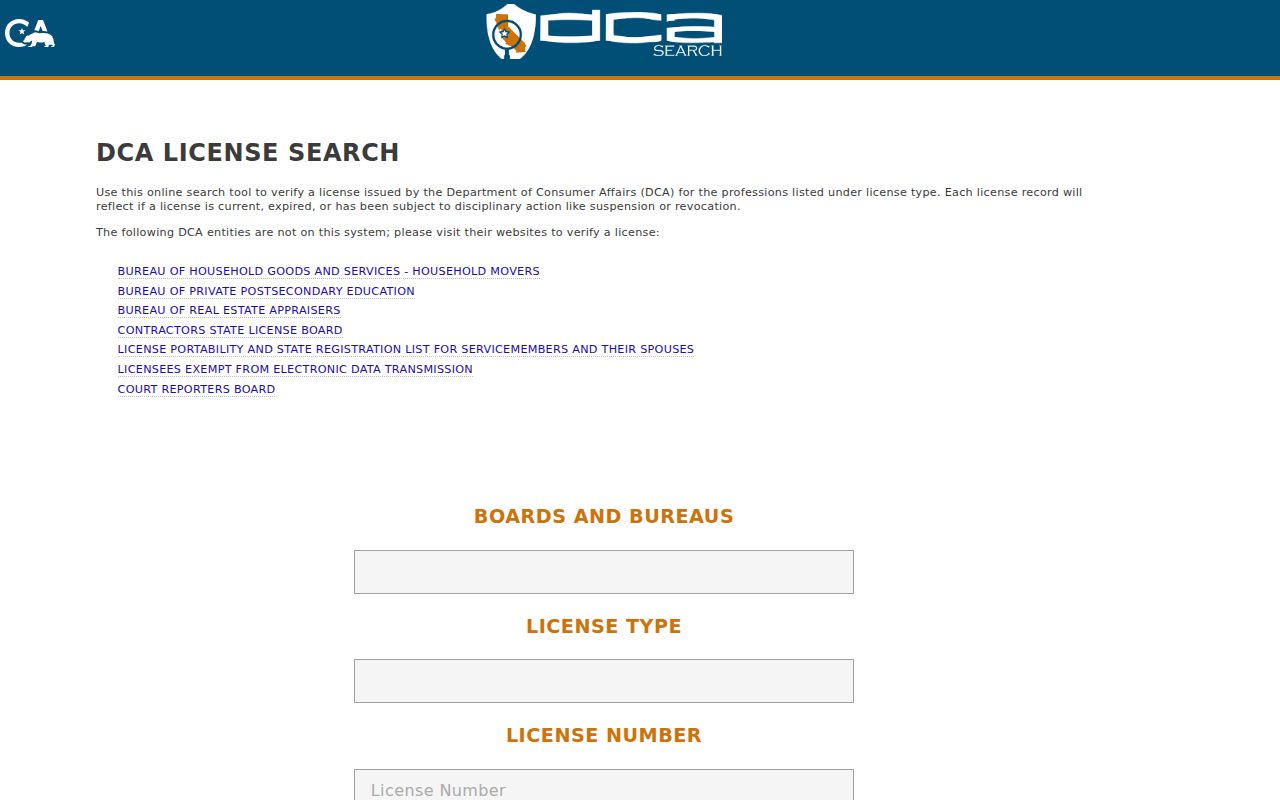
A license result is an official verification lead, but board-specific records may be needed for details that DCA does not display.
The California SOS business search screenshot shows the business-entity side of the same Claremont identity trail.
Pair SOS business records with LA County FBN records when a local trade name, owner, or business address matters.
Claremont City Clerk Records
City-level searches belong with the Claremont City Clerk or the relevant city department. The city public-records page names City Clerk Shelley Desautels, Deputy City Clerk Jamie Costanza, the City Hall address, and the public contact route. Building permits and plan checks sit under Community Development, with building staff contacts published. No separate public permit-search database was located in the research, so permit and plan-check records should be treated as city requests unless a later official portal is verified.
The Claremont public records screenshot shows the city access point for records that are local rather than county-held.
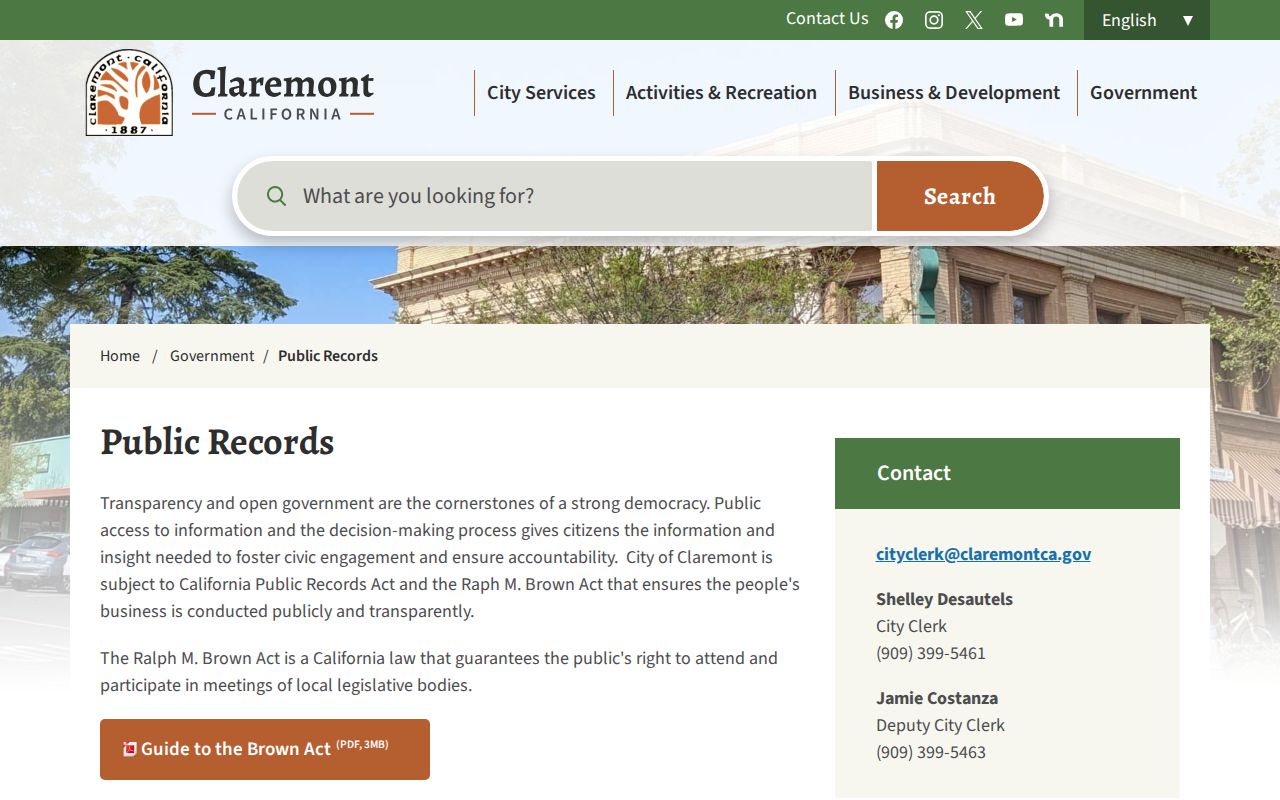
Use the city route for council, administrative, permit, and local police-record questions. Use county routes for deeds, vital records, elections, courts, and assessor records.
Claremont Custody Registry Searches
Custody and registry lookups are separate from general people directories. Los Angeles County Sheriff's Department operates the Inmate Information Center for county custody, with a general custody help number published in the research. California CDCR operates CIRIS for state incarcerated-person records, and the Federal Bureau of Prisons has a federal inmate locator. These sources should be used for custody status, not broad personal profiling.
The California Megan's Law Website is the official state registry for specified sex registrants. It is updated daily by law enforcement and carries legal-use restrictions. Registry information can be relevant to personal safety and civic awareness, but misuse can carry penalties.
The California Megan's Law screenshot below shows the official registry landing point for California searches.
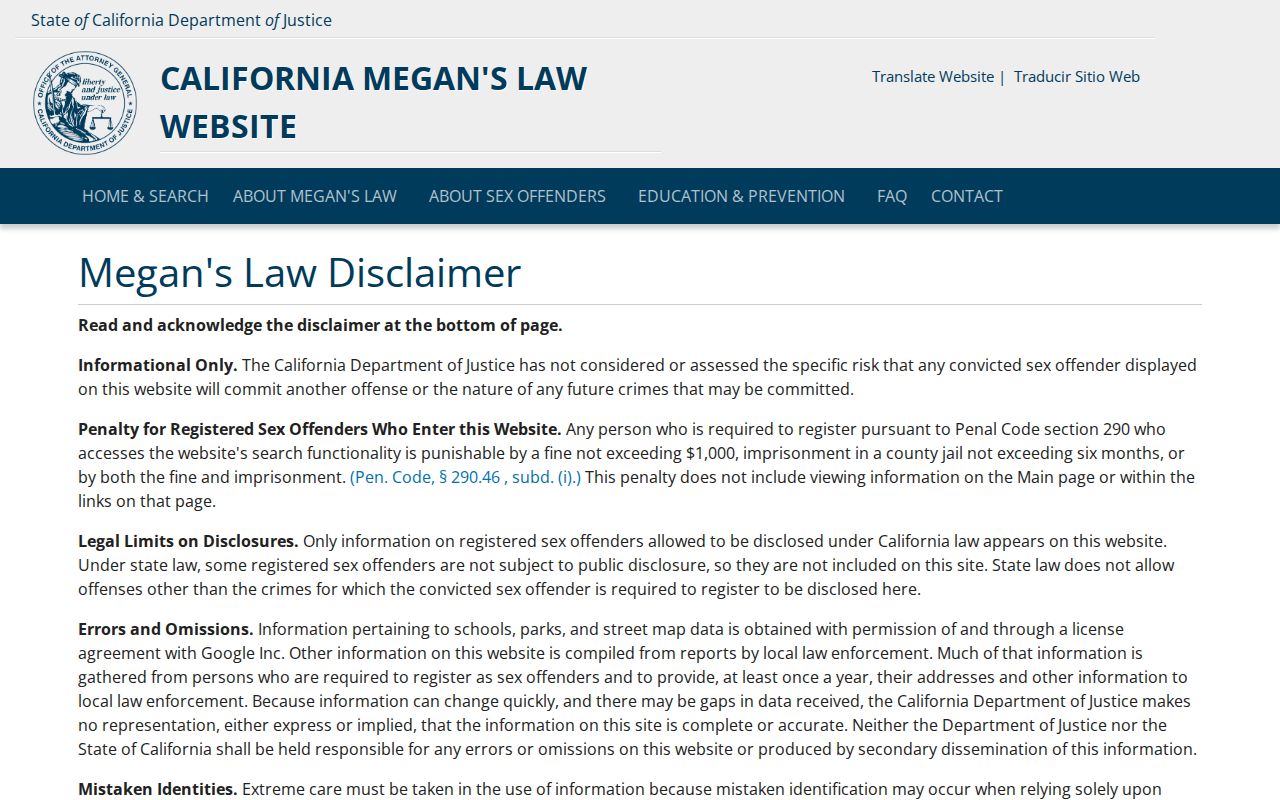
Use registry and custody records only through the official site rules and confirm sensitive details with the listed custodian.
Historical Claremont People Records
Historical Claremont work is stronger than average because the city has several archive paths. Claremont Colleges Library Special Collections names local-history materials for Claremont and the surrounding area, including city directories, cartographic resources, maps, newspapers, photographs, printed histories, manuscript collections, and ephemera. Claremont Heritage adds local collections tied to founders, neighborhoods, citrus industry, architecture, businesses, photographs, and community life.
Los Angeles Public Library and the California State Library fill gaps. LAPL's City Directories Index points to paper and microform city, county, state, and regional directories in the History & Genealogy Department. The California State Library says directories are useful for tracking ancestors or historic businesses and notes that most are not online. For a former Claremont resident, pair a census year with a city directory year, then add newspapers, obituaries, probate, and recorded-document clues.
Official Claremont Records Verification
Commercial people-finder sites compile public records, directory data, marketing data, and guesses. They may be stale or wrong. Official records are slower, but they identify the custodian, access limits, and copy path. A Claremont people search should use commercial-style results only as leads, then verify through the city, county, court, school, library, state license, or business-record source that actually holds the record.
California privacy rules add more limits. Safe at Home, confidential voter status, protected addresses, sealed cases, vital-record eligibility, and online deed-index restrictions all mean that missing data can be a legal protection, not a failed search. Use the official source first when accuracy matters.
Note: LA County's no-online-recorder-index rule is current in the research as of July 13, 2026.